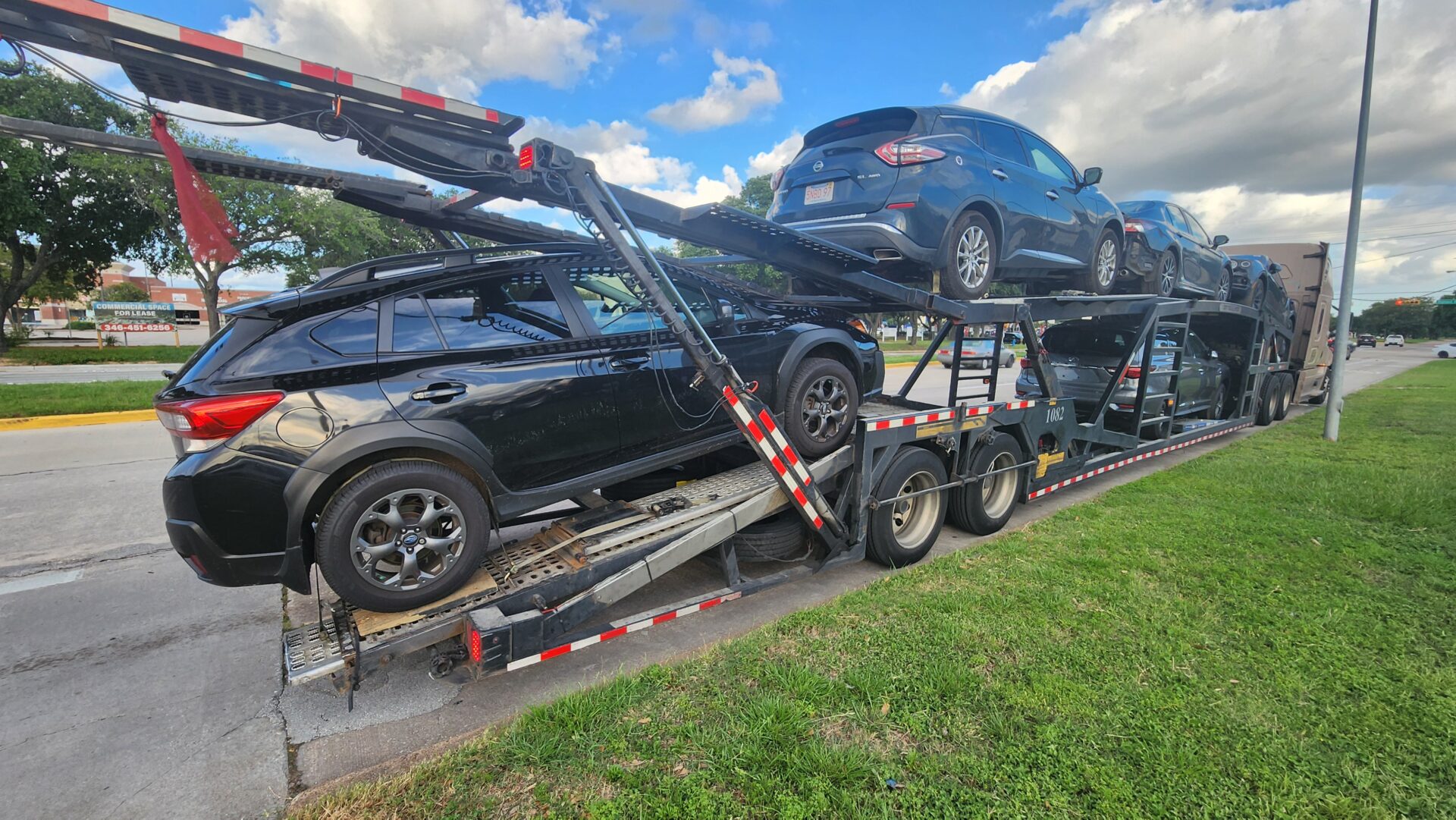
If you’re looking for a reliable car shipping service from Texas to New York, this completed delivery gives you a real-world reference point. A Subaru Crosstrek was recently transported from Katy, Texas (ZIP 77450) to Bayside, Queens, New York (ZIP 11361) — a long-haul route spanning 1,676 miles, completed in 4 transit days via open carrier at an all-inclusive rate of $1,100. This post covers the full shipment breakdown, what the route looks like operationally, and what to expect when shipping your own vehicle on a similar run.
Car Shipping from Katy, TX and Houston to Queens, NY
Katy sits roughly 30 miles west of downtown Houston — close enough that car shipping from Katy and car shipping from Houston often use the same carrier lanes and dispatch network. Bayside is a residential neighborhood in northeastern Queens, New York — bordered by Little Neck Bay and well within the NYC metro area. Connecting these two points means crossing multiple states and navigating some of the most congested stretches of the U.S. interstate system.
The primary corridor for this type of car shipping service typically follows I-10 East out of the Houston area, then transitions northward through the mid-Atlantic states before reaching the New York City metro. The northeast leg — particularly around New Jersey and the approach to New York — requires experienced dispatch coordination because carrier access points near Queens can be limited compared to more rural delivery areas.
Car Shipping Cost from Texas to New York: What’s Behind the $1,100 Rate
One of the most common questions people ask before booking a car shipping service is: how much does it actually cost? The all-inclusive rate of $1,100 for this 1,676-mile shipment covers both the carrier’s transport fee and the broker coordination fee — no line-item fuel charges, no mileage overages, no surprise fees at delivery. This is the number the customer agreed to, and the number they paid.
What’s typically included in an all-inclusive auto transport quote?
- Licensed carrier pickup and delivery
- Broker dispatch and route coordination
- Standard carrier liability insurance (check your carrier’s certificate for limits)
- Vehicle inspection at origin and destination (Bill of Lading)
- Customer communication throughout transit
The Carrier: Professional 7-Car Open Trailer
This shipment moved on a 7-car open multi-vehicle carrier — the industry standard for long-haul auto transport in the continental U.S. Open carriers are the most widely used transport method because they’re cost-effective, widely available, and safe for the vast majority of vehicles.
Is an open carrier the right choice for a Subaru Crosstrek?
For most standard passenger vehicles — including the Subaru Crosstrek — an open carrier is a practical and reliable option. The Crosstrek’s factory ground clearance and standard dimensions fit comfortably on a standard open hauler. Enclosed carriers are typically reserved for high-value exotics, classic vehicles, or owners who prefer extra weather protection and are willing to pay a premium for it.
What “4 Days” Actually Means
The 4-day transit time covers the period from carrier pickup in Katy to delivery in Bayside. On runs of this distance (1,500–1,800 miles), a 4-day window is typical — though actual transit can range from 3 to 6 days depending on factors like:
- Carrier load sequencing (when your vehicle is loaded affects when it’s off-loaded)
- Traffic and weather along the I-10 and northeastern I-95 corridors
- Delivery appointment scheduling at the destination
- DOT driver hours-of-service regulations
June 2026 Route Conditions: TX to NY
As of June 2026, the Texas-to-New York corridor remains one of the most active long-haul auto transport lanes in the country. Carrier availability on this lane is generally strong during summer months, as relocation demand increases across the Sun Belt and Northeast simultaneously.
Key considerations for summer shipments on this route:
- Book 5–10 days ahead of your desired pickup window — summer demand increases carrier lead times
- The northeastern approach (NJ Turnpike through Queens) sees elevated congestion from May through September
- Extreme heat in Texas during summer months is normal and open carriers routinely handle it; most vehicles are unaffected
- Hurricane season begins June 1 — Gulf Coast weather can occasionally affect carrier scheduling out of Houston and Katy
Who Uses a Car Shipping Service on This Route — and Why
The Katy, TX to Bayside, NY lane sees a steady mix of shipment types throughout the year. Whether you’re relocating, buying a vehicle online, or managing a seasonal move, understanding who typically ships on this corridor can help you feel confident that the process is well-established — and that carriers are experienced with its demands.
Relocation
The Houston to New York and Katy to New York auto transport lane is one of the most active in the U.S. Professionals relocating for employment, families moving for schools or family ties, and retirees transitioning from Texas suburban communities to the New York area make up a significant share of vehicle shipments on this route. Rather than logging 1,600+ miles behind the wheel, most people find it far more practical to use a door-to-door car shipping service.
Seasonal Vehicle Transfers
Some vehicle owners alternate between Texas and the Northeast based on work schedule or lifestyle. Shipping a second vehicle rather than driving is a practical choice when travel is time-constrained.
Online Vehicle Purchases
The online used-car market continues to grow. Buyers in Queens, New York frequently purchase vehicles from Texas dealerships or private sellers — and auto transport bridges that gap without requiring a cross-country drive.
How the Car Shipping Process Works: From Quote to Delivery
Whether this is your first time using a car shipping service or your fifth, the process follows a consistent framework. Here’s what the typical experience looks like on a long-haul route like Katy to Bayside:
1. Get a Car Shipping Quote
Provide your origin and destination ZIP codes, vehicle details, and preferred pickup window. A reputable broker generates an all-inclusive quote covering both carrier and coordination fees — no hidden charges added later. Once accepted, your shipment enters the carrier dispatch process.
2. Carrier Assignment and Pickup Scheduling
A licensed carrier is assigned and coordinates directly with you or your designated contact for pickup. The carrier completes a condition inspection (Bill of Lading) before the vehicle is loaded.
3. Transit
Your vehicle travels with other vehicles on the multi-car hauler. For this shipment, that was a 1,676-mile run over 4 days. Customers can typically track progress and receive updates through their broker contact.
4. Delivery and Final Inspection
The carrier delivers to the agreed location in Bayside. A final condition inspection is completed against the original Bill of Lading. Any discrepancies noted are documented at that time — this is how transport damage claims are properly initiated, if ever needed.
Frequently Asked Questions
Get an all-inclusive auto transport quote for your specific route, vehicle, and dates — no hidden fees, no pressure, door-to-door delivery.
Get Your Free Quote →Disclaimer: Shipment details, rates, and transit times shown reflect this specific completed delivery and are provided for informational purposes only. Pricing, availability, and transit times vary based on route, vehicle, season, and carrier scheduling. Past performance on a specific shipment is not a guarantee of future results. All auto transport services are provided by independent, federally licensed carriers. Star Auto Shipping operates as a licensed property broker (FMCSA licensed) and does not own or operate carrier equipment. Standard carrier liability coverage applies to all shipments; terms vary by carrier. Customers are encouraged to review their carrier’s insurance certificate and consider supplemental coverage if desired.

MC#: 1664753
USDOT#: 4282092