

Senren Liu
“Shipped my car from Houston to Berkeley and had an excellent experience. No bait-and-switch tactics, no AI chatbots - just fast, clear, and reliable communication. Highly recommended.”
April 13, 2026
5.0

Boat Shipping
Boat shipping moves your powerboat, sailboat, pontoon, or yacht overland without putting hours of towing, unfamiliar roads, or weather risk on you or your vessel. Whether the boat has its own trailer or needs one, boat transport is arranged with the trailer type, securement, and permits suited to its exact length, beam, and height.
Carriers are screened for active operating authority and cargo insurance before being matched with a boat shipment.
Bumper-pull, gooseneck, or lowboy trailers matched to your boat's length, beam, and height - with or without the boat's own trailer.
Quotes reflect the full cost of the move based on the boat's dimensions and route - no surprise add-ons later.
From a regional move to a full cross-country relocation, the same booking process covers all 50 states.
Boat shipping, also called boat transport or boat hauling, moves a boat overland by trailer and towing vehicle instead of trailering it yourself or sailing it to a new location. It's commonly used when relocating, buying a boat from out of state, moving seasonally between a summer lake and a winter marina, or shipping a boat to a dealer, auction, or storage facility. Rather than putting hours of unfamiliar towing on the road, professional boat transport gets it there safely, matched to what the boat actually needs.
That match matters more with boats than with almost any other vehicle type, since hull shape, beam, and height vary enormously - a bass boat and a yacht have almost nothing in common when it comes to what trailer and permits they require.
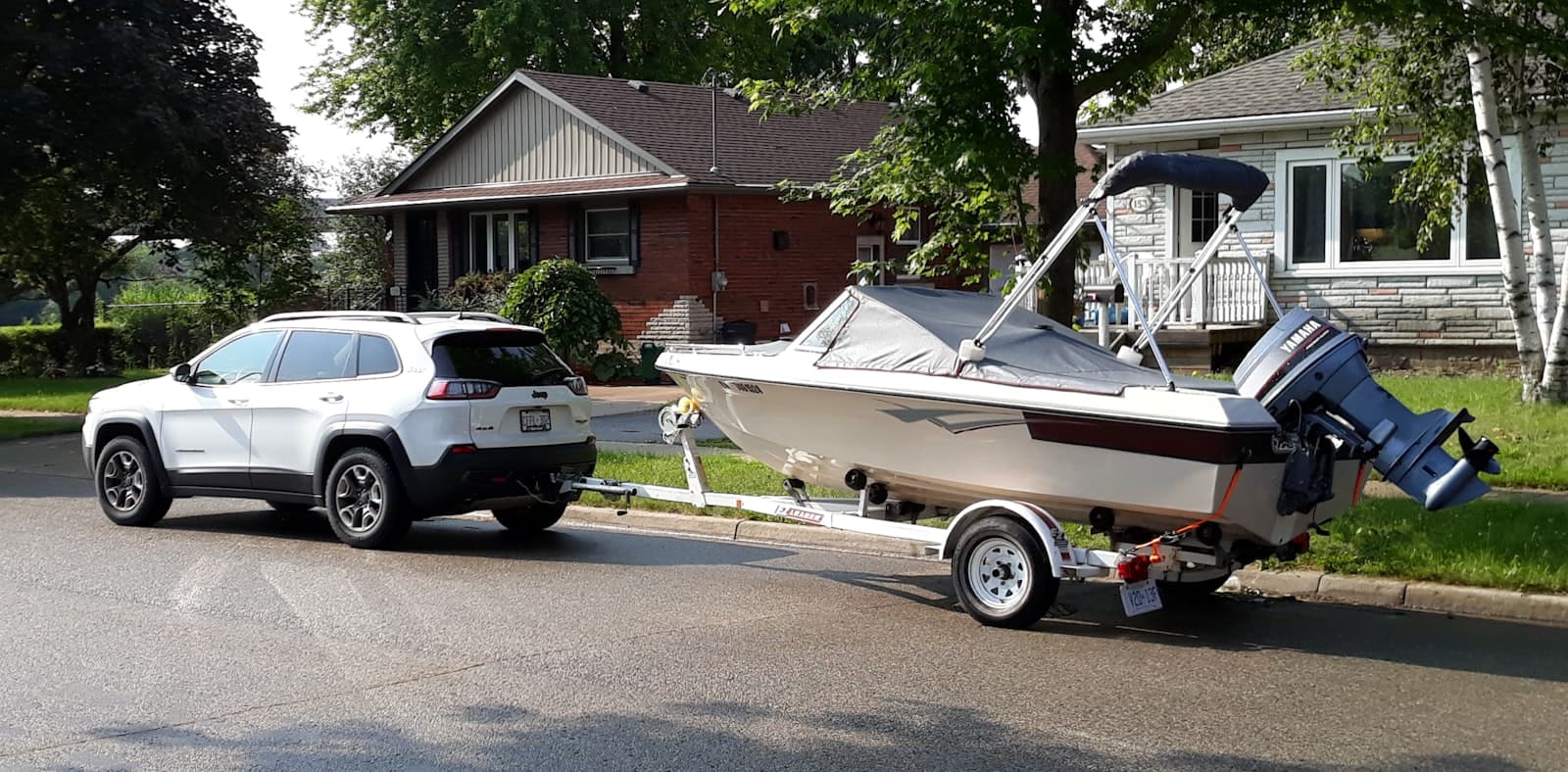
The most common vessel type shipped overland, typically moving on a bumper-pull or gooseneck trailer depending on size.
Wide, flat-bottomed hulls that often require careful trailer matching due to beam width rather than height.
Usually straightforward to ship on a standard bumper-pull trailer, similar to how many owners already tow them.
Typically require the mast to be unstepped and secured or shipped separately, since a stepped mast usually exceeds standard legal height limits.
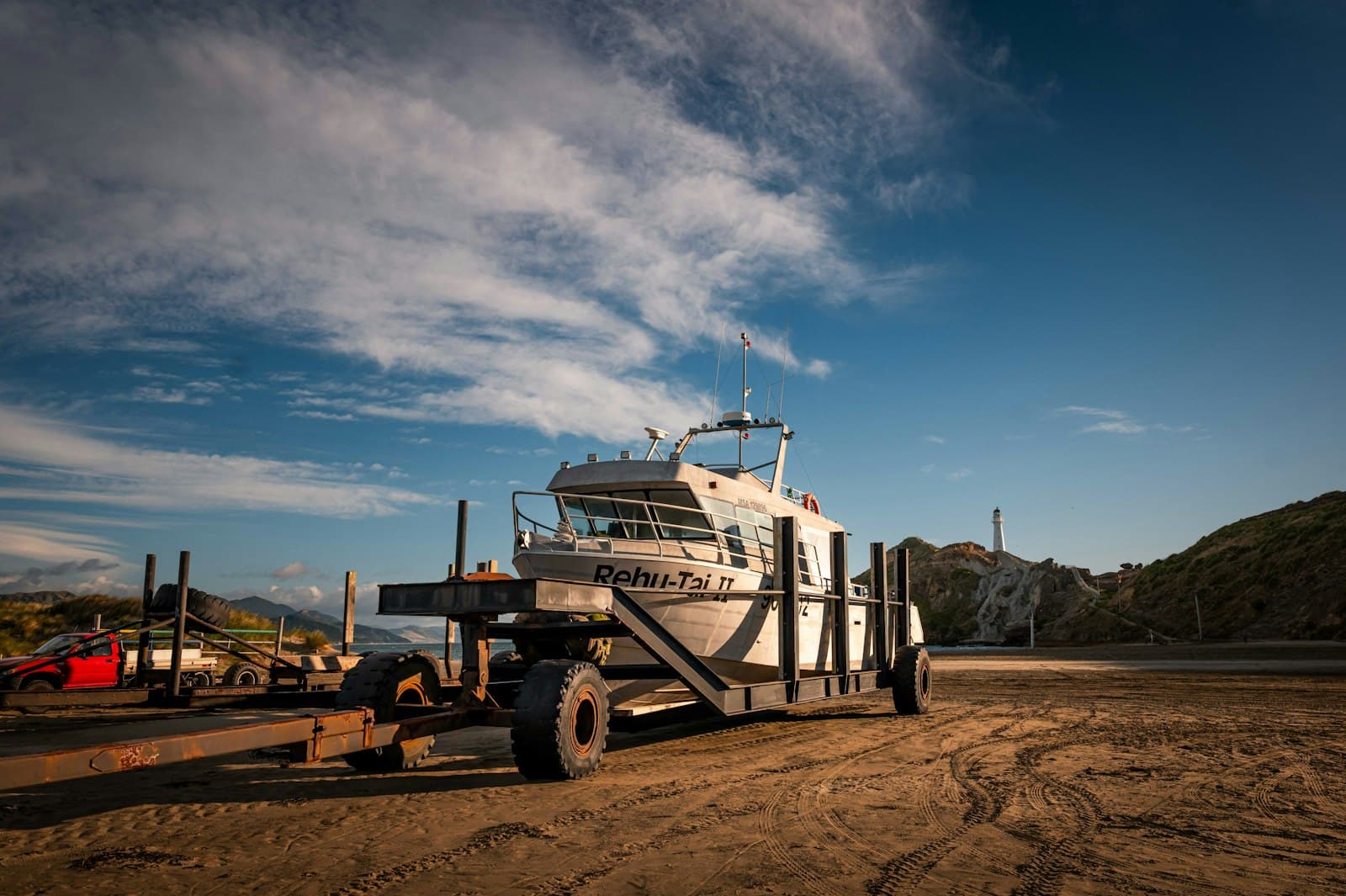
Often require a lowboy trailer, permits for width or height, and sometimes escort vehicles, depending on the exact dimensions and route.
Bumper-pull trailers handle most smaller boats and are similar to what many owners already use to tow their own boat locally.
Gooseneck trailers distribute weight more evenly across the towing vehicle and trailer, making them a common choice for mid-size boats that are too heavy or long for a standard bumper-pull setup.
Lowboy trailers sit lower to the ground and are typically used for boats with significant beam, height, or weight, helping keep the load within legal height limits where a standard trailer wouldn't.
For boats without their own trailer, carrier-owned trailers or hydraulic bunk systems built to support different hull shapes are typically used instead - it's important to mention this when requesting a quote, since it changes which equipment and carrier can be assigned.
Share the boat's length, beam, height, and whether it has its own trailer, and get a straightforward recommendation along with an accurate, no-obligation quote.
Booking starts with a based on the boat's length, beam, height, and weight, whether it has its own trailer, and the pickup and delivery locations. These specifications determine which trailer type is needed and whether permits or escort vehicles apply to the route. Sailboats typically need the mast unstepped and secured or shipped separately before transport, since a stepped mast usually exceeds standard legal height limits.
At pickup, the driver inspects the boat, documents its condition - including the hull, trailer, and any equipment like antennas or towers - on a bill of lading, and secures it for transport. At delivery, the same inspection happens again alongside the recipient, comparing the boat's condition to the pickup documentation before the bill of lading is signed to confirm everything arrived as expected.
Boats with significant beam or height can exceed standard legal width or height limits, which may require a permit and, depending on the state and route, an escort vehicle. Because these rules vary from state to state, permit and escort needs are typically assessed once the boat's exact dimensions are known, rather than assumed from its type alone. A wide pontoon boat or a tall sailboat still on its cradle are common examples of vessels that may need this extra planning even though they aren't unusually heavy.
Because these factors vary so much by boat type and route, an built around the specific vessel is the most reliable way to get an accurate number.
Carriers are required to carry active cargo insurance covering the boat in transit. For a higher-value boat or yacht, it's worth asking about supplemental coverage options and confirming the standard coverage limit before booking, since base coverage on many shipments is set with an average vessel value in mind.
Overland transport moves a boat by trailer and towing vehicle on roads and highways, and is the standard method for most domestic boat shipments of any reasonable size. Waterborne transport, sometimes called yacht shuttle service, carries a boat aboard a specialized cargo vessel and is generally reserved for very large yachts or international moves where overland transport isn't practical. For the vast majority of boats moving within the United States, overland transport is the more common, faster, and more cost-effective option.
The line between the two usually comes down to a combination of size and route. A boat that can legally and practically travel by road, even with a permit for additional width or height, is almost always better served by overland transport - it's faster to schedule, doesn't depend on port timing, and avoids the added logistics of loading onto a ship. Waterborne transport becomes the more sensible option mainly when a vessel's dimensions genuinely exceed what any road-legal trailer and permit combination can accommodate, or when the destination itself is only reachable by sea.
A meaningful share of boat transport happens around a specific event rather than a one-time personal move. Boats headed to or from a boat show, a brokerage sale, or a marine auction typically need to arrive in show-ready condition, since even minor cosmetic wear can matter for a sale or judging. Dealerships and brokers moving inventory between locations, or coordinating a batch of vessels for a single auction, can usually schedule multiple boats as one coordinated shipment rather than booking each separately - simplifying paperwork and keeping the whole group on the same timeline.
Boat transport comes up in a handful of recurring situations, each with slightly different priorities:
Seasonal relocation. Owners who move between a summer lake house and a winter destination often ship their boat along with their vehicles rather than towing it themselves each way.
Out-of-state purchases. Buying a boat from a dealer, private seller, or auction in another state means getting it home - shipping avoids a long, unfamiliar tow on an unfamiliar trailer setup.
Storage and marina moves. Moving a boat to or from a storage facility or marina at the start or end of boating season is one of the more routine reasons owners use professional transport.
Dealer and manufacturer shipments. Dealerships relocating inventory between locations, or manufacturers shipping new boats to dealers, often need multiple vessels moved as part of a coordinated shipment.
Insurance and repair moves. A boat headed to or from a repair facility after damage, or being relocated as part of an insurance claim, still needs to get there safely, even if it isn't in showroom condition.
Boats without a trailer. Buying a used boat that didn't come with its own trailer, or one whose trailer isn't roadworthy, is one of the more common reasons people specifically seek out a professional transport service rather than towing it themselves.
Myth
A boat can't be shipped without its own trailer.
Reality
Boats without a trailer can typically still be shipped using carrier-owned equipment or a hydraulic bunk system built for different hull shapes - it just needs to be disclosed when requesting a quote.
Myth
Only oversized yachts need permits.
Reality
Even a modestly sized boat can require a permit if its beam or height, including a trailer and any tall fixtures, exceeds standard legal limits - width is often the trigger, not just overall size.
Myth
Sailboats can ship with the mast still stepped.
Reality
A stepped mast almost always puts a sailboat over standard legal height limits. In most cases, the mast needs to be unstepped and secured or shipped separately before overland transport.
Senren Liu
“Shipped my car from Houston to Berkeley and had an excellent experience. No bait-and-switch tactics, no AI chatbots - just fast, clear, and reliable communication. Highly recommended.”
April 13, 2026
Elango Peri
“We recently shipped our car with Star Auto Shipping, and the experience was excellent. Everything went smoothly-the timing was perfect, and the car was delivered right on schedule. I will definitely use their services again in the future.”
April 28, 2026
Joe DeAmicis
“Jerry Brown, my sales rep, was very responsive and attentive to make sure the car was picked up on time and as promised. He always answered my calls and never left me hanging. Would definitely use them again.”
May 18, 2026
Karen Matilda
“I had an excellent experience with this Star Auto Shipping company! From start to finish, the communication was outstanding.If you’re looking for a reliable, professional, and trustworthy car transport company, I highly recommend them. Great communication, excellent service and fair pricing”
July 7, 2026
Samia Farooq
“I had an outstanding experience with Star Auto Shipping from start to finish. The entire process was incredibly smooth, well organized, and completely stress free.If you’re looking for a company that is fast, reliable, honest, and communicates every step of the way, I highly recommend Star Auto Shipping”
August 5, 2026
Ravichandran Palaniope
“I recently used Star Auto Shipping to move my car from Wilmington, Delaware, all the way down to Katy, Texas, and I am very impressed with the service. The entire process was smooth, and the communication was great from start to finish. My vehicle arrived safely and on time. If you're looking for a reliable auto transport company, I highly recommend their team for a stress-free experience!”
March 15, 2026
Idah V.
“Incredible communication by this team. They do as they say. I spoke either Jerry and he promised that he will get all that i needed on time and surely he did. He also sought for a better rate than initially submitted. ”
July 5, 2026
Jeff A
“Close to the best price but way above in service, communication and sticking to promises. I contracted the lowest bidder and for 9 days got empty promises. Finally contacted Star and they picked up next day.”
June 4, 2026
Brigette
“I googled a few places and landed here. I’m glad I did. Star Auto did not over quote, they were honest with quick response. I called on Wednesday & vehicle was picked up by Thursday. The best part is that the car was delivered Saturday morning. Everyone was professional. Most importantly, I would use again and most definitely refer.”
June 8, 2026
Makaiyla Perdue
“10/10 experience! The best car delivery service, great communication and fast delivery. Thank you so much my car was delivered with no issues!”
August 13, 2026
SHOAIB CHOUDHRY (.)
““Excellent car shipping service! Fast, professional, reliable, and completely stress-free. Highly recommend!””
September 4, 2026
christian pittinaro
“Great overall experience! Delivered on time with great communication.”
August 24, 2026
Twyla West
“Great communication, car was shipped from Houston to Cleveland Ohio. Came on time and in perfect condition. Great price!”
August 18, 2026
Chloe Van
“Great customer from Jerry, highly recommend them. No hidden or extra fee at the end”
August 14, 2026
Anthony Hall
“They were quick and professional. We broke down in Massachusetts while driving from Maine to Virginia and had to be brought back to Maine. They were very helpful and responsive.”
August 5, 2026
Nevil Patel
“Recommend the service”
July 3, 2026
Saravana Prasad S
“Reliable delivery!”
July 29, 2026
Luna Production713
“10/10 great service from Houston to Lubbock no issues. Car arrived in perfect condition”
July 28, 2026
Isaiah Medina
“Jerry was great, professional, and informative, he made the process very easy! Highly recommend this company!”
July 20, 2026
Hasnan Rashid
“Great service with excellent response time. Definitely my new go-to for shipping cars”
July 17, 2026
Vahid Sh
“Good price and on time delivery”
July 10, 2026
J P
“Excellent service, Gerry was very helpful and showed a lot of interest and respect for getting the job done!!”
June 18, 2026
Nirali Patel
“Jerry was patient, professional, and incredibly helpful throughout the entire shipping process. He worked around our schedule to find a driver that fit our timing, and made everything as smooth as possible. Overall, it was a great experience, and I would definitely recommend them to anyone looking to ship their vehicle!”
June 29, 2026
Parimal Desai
“Excellent service. Reasonable price. Very reliable and safe. Great communication. Shipped SUV from Texas to Connecticut. Highly recommend using Star Auto Shipping!”
September 8, 2026
axel
“Great experience from start to finish. Communication was clear and professional, everything was punctual, and the paperwork and payment process were easy to understand. They kept both the drivers and me informed throughout the entire transport process. Smooth, reliable, and well organized. Highly recommended!”
September 11, 2026
Temilade Shonibare
“I found this company online and called to speak with Jerry. He was very attentive and helped me ship a car with a quick turnaround time the next day! He connected me with a great driver, Olamide. Started on Friday & I received the car in Atlanta from Houston by Sunday! Highly recommend.”
September 14, 2026
Anabel Lambert
“Great experience overall! My car arrived quickly and everything went smoothly. They kept in contact with me throughout the process, and the contract terms were clear and easy to understand. No surprises, good communication, and my car arrived safely. I would definitely use them again!”
September 19, 2026
Boat shipping, also called boat transport or boat hauling, is the process of moving a boat overland using a trailer and towing vehicle instead of sailing or motoring it to a new location. It covers powerboats, sailboats, pontoons, and yachts, using bumper-pull, gooseneck, or lowboy trailers matched to the boat's length, beam, and height.
Yes. Boats without their own trailer can typically still be shipped using a carrier-owned trailer or a hydraulic bunk system built to support different hull shapes. It's important to mention when requesting a quote that the boat doesn't have a trailer, since it affects which equipment and carrier can be assigned.
Cost depends on the boat's length, beam, height, and weight, whether it has its own trailer, distance, whether permits or escorts are required for a wide or tall load, and current fuel prices. Larger boats and those requiring specialized trailers or permits generally cost more than a standard boat on its own trailer over the same distance. An instant quote based on the specific boat and route provides the most accurate number.
Smaller boats commonly ship on bumper-pull trailers, similar to what many owners already tow themselves. Mid-size boats often use gooseneck trailers, which distribute weight more evenly for larger loads. Boats with significant beam, height, or weight may require a lowboy trailer, which sits lower to the ground to help keep the load within legal height limits.
In most cases, yes. A stepped mast typically makes a sailboat too tall to transport legally on a standard trailer, so the mast is usually unstepped and secured alongside the hull, or removed and shipped separately, before overland transport.
Remove or secure antennas, radar equipment, outriggers, and Bimini tops, drain the bilge and any standing water, secure all hatches and doors, remove loose personal items and gear, check that the boat's own trailer (if used) is in good working condition, and photograph the boat from all angles before pickup.
Carriers are required to carry active cargo insurance covering the boat in transit. For a higher-value boat or yacht, it's worth asking about supplemental coverage options and confirming the standard coverage limit before booking.
Boats with significant beam or height can exceed standard legal width or height limits, which may require a permit and, in some cases, an escort vehicle depending on the state and route. Because these rules vary by state, permit needs are typically assessed once the boat's exact dimensions are known.
Transit time depends mainly on distance. A regional shipment of a few hundred miles often takes a few days, while a cross-country move typically takes about one to two weeks, depending on route complexity and whether permits or escorts are needed.
Boat shipping commonly covers powerboats, pontoon boats, bass and fishing boats, sailboats, cabin cruisers, and yachts, using the trailer type and permits suited to each vessel's size and hull design.
Door-to-door delivery is available in most areas, picking up and delivering at a marina, storage facility, or private residence. In locations where a large trailer can't safely access the address, the driver may arrange a nearby meeting point instead.
Overland transport moves a boat by trailer and towing vehicle on roads and highways, and is the standard method for most domestic boat shipments. Waterborne, or yacht shuttle, transport carries a boat aboard a specialized cargo vessel and is generally reserved for very large yachts or international moves where overland transport isn't practical.
Yes, in most cases, using a specialized trailer with hydraulic bunks or adjustable supports designed for unusual hull shapes and larger dimensions. Very large yachts that exceed what overland transport can reasonably handle are sometimes better suited to waterborne transport instead.
Compare the boat's condition against the pre-shipment photos before signing the delivery paperwork, checking the hull, trailer, and any removed or reinstalled equipment like antennas or towers. Note anything new directly on the bill of lading before the driver leaves.
Yes. Demand rises in spring as boats come out of winter storage and again in fall as owners relocate for the season, which can affect both pricing and how far in advance a shipment should be booked.
Share your boat's length, beam, height, and whether it has a trailer, plus pickup and delivery locations, for an accurate, no-obligation boat transport quote.