

Open Auto Transport
Open Auto Transport: The Most Common Way to Ship a Car, Explained
Open auto transport moves a vehicle on an open-air trailer that typically carries 7 or 9 vehicles at a time - the same type of truck used to deliver new cars to dealerships every day. It is the most widely used and most affordable way to ship a car, truck, SUV, or motorcycle anywhere in the United States, and it's the option chosen for the large majority of vehicle shipments nationwide.
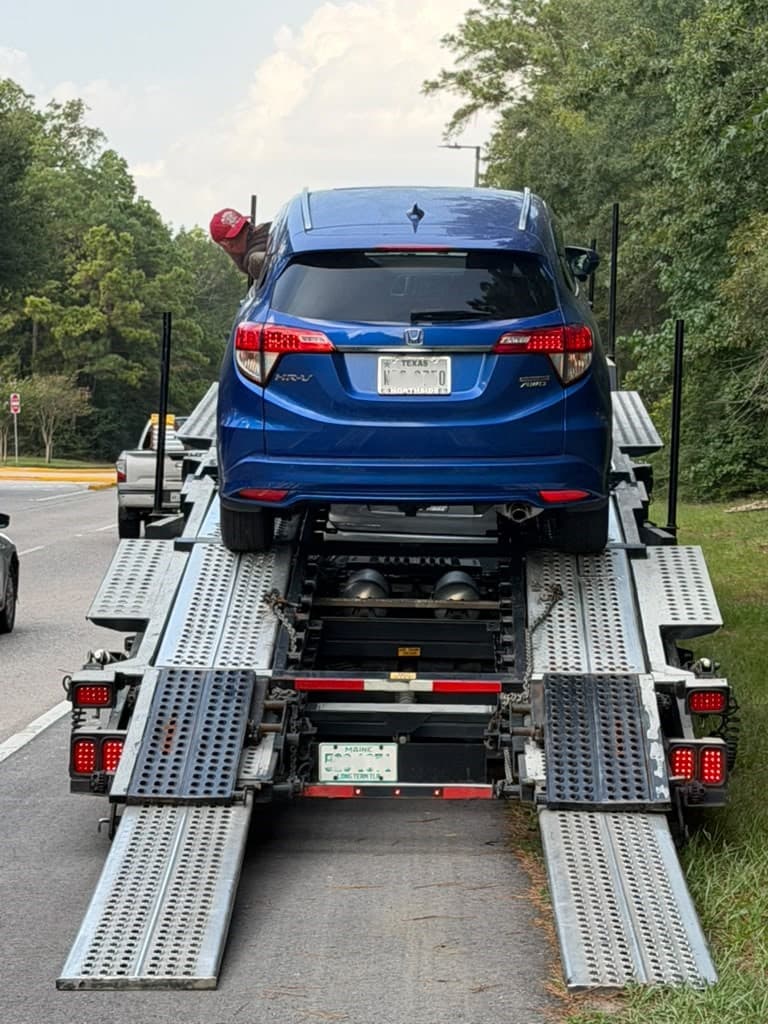
What Is Open Auto Transport?
Open auto transport, sometimes called open carrier transport or open trailer car shipping, is the process of shipping a vehicle on a trailer without any side or roof covering. The vehicle rides exposed to the open air, secured to the deck with wheel straps or chains, alongside several other vehicles headed in the same direction. These multi-car trailers are typically built with two levels, an upper deck and a lower deck, and typically holds either 7 or 9 standard-size vehicles depending on the trailer's configuration and each vehicle's size and weight.
This is the same equipment automakers use to move new inventory from factories and ports to dealership lots, which is part of why it's considered a proven, well-tested way to move a vehicle over long distances. Because a single trip can carry multiple vehicles, the cost per vehicle is lower than shipping methods that dedicate an entire trailer to one car, which is the main reason open transport has become the default choice for most car shipping in the U.S.
How Open Car Shipping Works
The process starts with a based on the vehicle's make, model, and year, the pickup and delivery locations, and the preferred pickup date. Once a shipment is scheduled, a driver arrives at the agreed pickup location, inspects the vehicle with the owner or their representative, and documents its condition on a bill of lading before loading it onto the trailer.
During loading, the driver decides where each vehicle sits on the trailer based on size, weight distribution, and ground clearance. Lower-clearance vehicles are frequently placed on the top deck to reduce exposure to road spray and debris kicked up from the highway, while trucks and taller SUVs are more often loaded on the bottom. Vehicles are anchored with wheel straps at all four tires to keep them stable throughout the trip.
At delivery, the driver unloads the vehicle, inspects it again alongside the recipient, and both parties sign the bill of lading to confirm the vehicle's condition matches what was documented at pickup. Any discrepancy should be noted directly on that document before the driver leaves, since it becomes the primary record for any damage claim.
Open vs. Enclosed Auto Transport
Both methods safely move a vehicle from point A to point B - the difference comes down to cost, exposure, and how quickly a truck can be scheduled.
| Factor | Open Transport | Enclosed Transport |
|---|---|---|
| Average cost | Lower - shared trailer capacity keeps per-vehicle cost down | Higher - dedicated, covered trailer space |
| Weather exposure | Exposed to sun, rain, and road spray | Fully shielded from weather and debris |
| Carrier availability | Widely available on nearly every route | Fewer trucks, longer scheduling lead time |
| Best for | Daily drivers, SUVs, trucks, most standard vehicles | Classic, exotic, or high-value vehicles |
| Vehicle capacity per trailer | 7 or 9 vehicles | 1-7 vehicles |
| Typical use case | Cross-country moves, dealership transport, everyday shipping | Auto shows, collector cars, brand-new luxury vehicles |
For most everyday vehicles - sedans, SUVs, minivans, and pickup trucks - open transport offers the best balance of cost and availability. Enclosed transport is worth the higher price mainly for classic cars, exotic or luxury vehicles, or any car where the owner wants zero exposure to weather and road debris during the trip.
Is Open Auto Transport Safe?
Open transport is the industry standard, and it moves the overwhelming majority of vehicles shipped across the country every year without incident. Drivers who operate multi-car trailers are trained specifically in loading sequence, weight distribution, and securement, and every vehicle is inspected and documented before it's loaded and again after it's unloaded.
The realistic trade-off compared to enclosed transport isn't a meaningfully higher risk of damage - it's exposure to normal environmental conditions. A vehicle on an open trailer experiences the same weather a car would experience being driven on the highway: sun, rain, road spray, dust, and the occasional piece of road debris. Most vehicles arrive needing nothing more than a routine wash. Actual mechanical or body damage during open transport is uncommon, and the pickup/delivery inspection process exists specifically to catch and document anything that does happen so it can be addressed quickly.
What Affects Open Auto Transport Cost?
Because open transport pricing responds to real-time supply and demand for trucks along a given route, exact cost varies shipment to shipment. The factors that consistently move the price up or down are:
- Distance. Longer routes cost more in total but typically cost less per mile than short-distance moves.
- Vehicle size and weight. Larger vehicles like trucks and full-size SUVs take up more trailer space and reduce how many other vehicles fit on the same load.
- Route popularity. High-traffic corridors between major metro areas usually have more available trucks and more competitive pricing than remote or low-traffic routes.
- Time of year. Demand shifts seasonally - snowbird season, summer moving season, and college move-in and move-out windows all tend to push prices and lead times up on certain routes.
- Pickup date flexibility. A flexible pickup window gives dispatch more options for matching a vehicle to an available truck, which generally works in the customer's favor on price and speed.
- Vehicle condition. Non-running vehicles often cost more to ship because they require winching equipment and extra loading time.
Because these factors shift by the day, the most reliable way to get an accurate number is an built around the specific vehicle and route rather than a generic published rate.
How Long Does Open Transport Take?
Transit time is driven mainly by total distance, with regional shipments (a few hundred miles) often completing in 1 to 3 days once picked up, and coast-to-coast shipments typically taking 7 to 10 days. Two windows matter for planning purposes: the pickup window, which is how long it takes to match the vehicle with an available truck after booking, and the transit window, which is the actual driving time once the vehicle is loaded. Weather, road conditions, and how many other stops a driver has on the same route can add a day or two in either direction.
How to Prepare a Vehicle for Open Transport
A little preparation before pickup day makes the whole process faster and protects the owner if any dispute over condition comes up later:
- Wash the exterior so existing scratches, dents, or paint chips are easy to see and photograph.
- Take dated, timestamped photos from all four sides, the roof, and the interior before pickup.
- Remove all personal items, electronics, and valuables from the vehicle.
- Remove or deactivate toll transponders (E-ZPass, EZ Tag, SunPass, etc.) to avoid unexpected tolls being charged during transit.
- Disable aftermarket alarm systems so they don't drain the battery or trigger during loading.
- Leave approximately a quarter tank of fuel - enough for loading, unloading, and short drives, without adding unnecessary weight.
- Check for fluid leaks (oil, coolant, transmission fluid) and mention any known issues to the dispatcher in advance.
- Fold in side mirrors and retract antennas if applicable.
- Note the current mileage for the bill of lading.
- Make sure the tires are properly inflated, especially if the vehicle will be winched or towed on or off the trailer.
What Vehicles Can Ship on an Open Carrier?
Open carriers are built to handle the vast majority of consumer vehicles on the road, including:
Larger, lifted, or oversized trucks may require a specific trailer with the clearance and weight capacity to accommodate them - this is worth flagging when requesting a quote so the right equipment is scheduled from the start. Owners of classic, exotic, or investment-grade vehicles sometimes choose enclosed transport instead, purely for the extra weather protection, though open transport remains a fully safe option for nearly any daily-driven vehicle.
Common Open Auto Transport Myths
Myth
Open transport frequently damages vehicles.
Reality
In reality, damage during open transport is uncommon. The pickup and delivery inspection process exists specifically to catch, document, and resolve the rare cases where something does happen.
Myth
Only cheap or older cars ship on open trailers.
Reality
New vehicles are delivered from factories to dealerships on open carriers every single day. It's a mainstream method used for nearly every type of vehicle, not just budget shipping.
Myth
Weather will ruin a car shipped on an open trailer.
Reality
A vehicle on an open trailer experiences ordinary weather - similar to driving on the highway - not prolonged exposure to standing water, hail, or extreme conditions. Severe weather more often causes a scheduling delay for safety than actual vehicle damage.
Open Auto Transport: Frequently Asked Questions
What is open auto transport?
Open auto transport is a method of shipping a vehicle on an open-air trailer that typically carries 7 or 9 vehicles at a time, stacked across one or two levels. It's the same type of trailer used to deliver new vehicles to dealerships, and it's the standard, most widely available way to ship a car, truck, SUV, or motorcycle in the United States.
Is open auto transport safe?
Yes. Open auto transport moves the large majority of vehicles shipped in the U.S. each year without incident. Vehicles are secured with wheel straps or chains, inspected before and after loading, and driven by operators trained specifically in multi-car hauling. The main trade-off compared to enclosed transport is exposure to weather and road debris, not an increased risk of mechanical or structural damage.
How much does open auto transport cost?
Cost depends on distance, vehicle size and weight, the specific pickup and delivery locations, time of year, fuel prices, and pickup-date flexibility. Because open trailers carry multiple vehicles at once, the cost per vehicle is lower than enclosed transport, generally by 30 to 40 percent. An instant quote based on the specific vehicle and route gives the most accurate price.
How long does open car shipping take?
Transit time depends on total distance and route. Short regional shipments often move in 1 to 3 days, while coast-to-coast shipments typically take 7 to 10 days. Pickup itself can take a few days to schedule after booking, depending on carrier availability on that route.
What's the difference between open and enclosed auto transport?
Open auto transport uses a multi-car, open-air trailer and is more affordable and more widely available, since most carriers on the road run open trailers. Enclosed auto transport uses a fully covered trailer that shields a vehicle from weather, dust, and road debris, and is generally chosen for classic, exotic, or high-value vehicles, at a higher price than open transport.
Will my car get damaged or dirty on an open trailer?
A vehicle shipped on an open trailer can pick up road dust, dirt, or light debris during transit, similar to driving on a highway. Actual damage is uncommon; carriers photograph and document a vehicle's condition at pickup and again at delivery specifically so any issue can be identified and addressed. Most vehicles arrive needing nothing more than a routine wash.
Can I ship a non-running or inoperable vehicle on an open carrier?
Many open carriers can load a non-running vehicle using a winch, but not every truck on every route is equipped for it. It's important to disclose that a vehicle doesn't drive, start, steer, or brake when requesting a quote, since it affects which carrier and equipment can be assigned and may affect price.
How do I prepare my car for open transport?
Wash the vehicle so any existing damage is easy to see and photograph, remove personal items and toll transponders, disable any aftermarket alarm, leave about a quarter tank of fuel, and check for fluid leaks. Take dated photos from all four sides plus the interior before the driver arrives, and note the vehicle's mileage.
Is open auto transport insured?
Yes. Carriers are required to carry active cargo insurance covering vehicles while in transit. Coverage amounts and terms vary by carrier, so it's reasonable to request a certificate of insurance for the specific truck assigned to a shipment before pickup.
Does weather affect open car shipping?
Vehicles on an open trailer are exposed to normal weather conditions during transit, including rain, sun, and road spray, similar to a car being driven on the highway. Extreme weather such as major storms can delay pickup or route timing for safety, but it does not typically cause vehicle damage.
Can I put items inside my car during shipping?
It's generally advised against. Cargo insurance typically covers the vehicle itself, not personal belongings placed inside it, and extra weight can affect a carrier's load limits. Any items left inside are transported at the owner's own risk.
Top load or bottom load: does it matter for open transport?
Two-level open trailers load some vehicles on the upper deck and some on the lower deck. Top loading is often preferred for lower-clearance or higher-value vehicles since it reduces exposure to road spray and debris kicked up from the road, while bottom loading is common for trucks and SUVs. Placement is decided by the driver based on vehicle mix, weight distribution, and clearance.
Is open transport available for cross-country shipping?
Yes. Open transport is used for the majority of cross-country and long-distance vehicle shipments in the U.S. because open-trailer carriers are more numerous on major interstate routes than enclosed carriers, which typically means faster scheduling for long hauls.
What vehicles are best suited for open auto transport?
Open auto transport works well for the vast majority of vehicles, including sedans, hatchbacks, SUVs, minivans, and standard pickup trucks. Owners of classic, exotic, or vehicles with very low ground clearance sometimes choose enclosed transport instead for extra protection, though open transport remains a safe option for nearly any daily-driven vehicle.
Get an Open Auto Transport Quote in Minutes
Share the pickup and delivery locations, vehicle details, and preferred dates to get an accurate, no-obligation open transport quote.