

Senren Liu
“Shipped my car from Houston to Berkeley and had an excellent experience. No bait-and-switch tactics, no AI chatbots - just fast, clear, and reliable communication. Highly recommended.”
April 13, 2026
5.0

Luxury & Exotic Car Shipping
Luxury and exotic car shipping covers everything from a newly delivered luxury sedan to a low-slung supercar that can't tolerate a standard loading ramp. Whether the vehicle is a Ferrari, Lamborghini, Porsche, Bentley, Rolls-Royce, McLaren, or any other high-end make, the right transport plan comes down to one question: how much protection does this specific vehicle need from pickup to delivery?
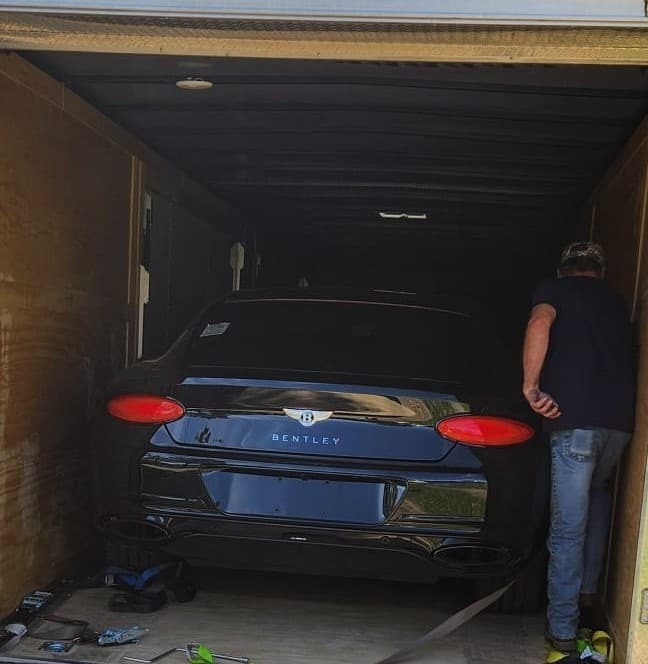
Luxury and exotic car shipping isn't a single fixed service - it's transport matched to what a high-end vehicle actually needs. A newer luxury sedan with standard ground clearance has different requirements than a low-slung exotic with a front splitter just inches off the ground, or a restored collector car where originality is the main concern. What they typically share is higher value, more delicate finishes or components, and a lower tolerance for the kind of routine wear a standard vehicle can shrug off.
In practice, that usually means enclosed transport, liftgate or low-angle loading, soft-strap securement instead of chains, and a carrier experienced with the specific handling a performance or high-value vehicle requires.
A fully covered trailer shields custom paint, wraps, and delicate finishes from rain, sun, dust, and road spray that an open trailer can't prevent.
Enclosed trailers eliminate exposure to the small rocks, grit, and debris an open-air multi-car trailer can kick up at highway speed.
Liftgates and low-angle ramps are designed specifically for vehicles with minimal front and side clearance, common on performance and exotic cars.
Fewer vehicles per load means less handling, less risk of contact between vehicles, and more careful positioning throughout the trip.
Open transport still has its place - a well-maintained, entry-level luxury vehicle on a short, lower-risk route can ship safely on an open trailer, and it costs meaningfully less. But for true exotics, supercars, and vehicles with custom paint, rare parts, or a finish that's costly to repair, most owners decide the added protection of enclosed transport is worth the premium.
Ground clearance is one of the biggest differences between shipping a standard vehicle and shipping an exotic. Many performance and exotic cars sit low enough that a standard sloped loading ramp risks scraping the front splitter, bumper lip, or undercarriage. Experienced carriers address this with a hydraulic liftgate, which raises the vehicle to trailer height and lowers it level to the ground, or with very low-angle ramps designed specifically for low-clearance vehicles.
Securement matters just as much as loading. Rather than chains hooked directly to the frame, most high-end vehicle transport uses soft straps looped over the tires or through the wheels, letting the suspension move naturally and avoiding point-stress on bodywork or aftermarket components. For particularly delicate or heavily modified vehicles, some carriers also use air-ride suspension trailers, which reduce the road vibration transferred to the vehicle during the trip.
The category covers more than just supercars. Common examples include:
Owners of classic and collector vehicles often have overlapping needs with luxury and exotic car shipping, particularly around enclosed transport and careful handling - the difference usually comes down to whether the vehicle's value is tied to originality and age, or to its performance, rarity, and current market price.
Pickup begins with a full inspection of the vehicle. The driver checks its condition and notes any existing marks, chips, or scratches on the bill of lading - this record is what gets compared again at delivery, so accuracy at this stage matters. Once the inspection is complete, the vehicle is loaded using equipment suited to its clearance and design, often a liftgate or very low-angle ramp for exotic and performance cars, then secured with soft straps.
During transit, updates on the shipment's progress should be available on request, particularly given the value involved. At delivery, the vehicle is inspected again alongside the recipient and compared to the pickup documentation before the bill of lading is signed. Any new mark, however minor, should be noted on the paperwork before the driver leaves, since a signed clean report is the record that confirms the vehicle arrived in the condition it left.
A common misunderstanding is assuming a personal auto policy, including a specialty or agreed-value policy some luxury and exotic owners carry, automatically covers a vehicle while it's on a carrier's trailer. It generally does not. Coverage during transit comes from the carrier's own cargo insurance, and it's worth checking directly with a personal insurance provider whether an existing policy extends to transit at all, in addition to requesting the carrier's certificate of insurance for the assigned truck before pickup.
For a particularly high-value vehicle, asking about supplemental coverage options is a reasonable step, since standard cargo insurance limits are set with an average vehicle value in mind rather than a seven-figure exotic.
Luxury and exotic vehicles are often kept in private garages, storage facilities, or gated communities rather than a typical driveway. A standard multi-car hauler is a large commercial truck, and height restrictions, narrow streets, or security checkpoints can prevent it from reaching the exact address. Discussing the specific pickup and delivery locations in advance lets the carrier plan for this - in most cases, door-to-door delivery is still possible, and where it isn't, the driver can arrange a nearby meeting point, such as a large parking lot, instead.
Because these factors vary by vehicle and route, an built around the specific car provides the most accurate cost.
Tell us the make, model, ground clearance, and timeline, and we'll help match it with a carrier experienced in the specific equipment and care it needs - no pressure, no obligation.
High-value vehicles come with higher stakes, which makes a few specific questions worth asking before booking:
Taken together, these questions matter more for luxury and exotic shipping than they do for a routine vehicle move, simply because the cost of getting any one of them wrong is higher - both in dollars and in the kind of damage that's genuinely difficult to repair to an original standard.
Open transport is more affordable, but for a low-clearance or high-value exotic, the savings rarely outweigh the risk of weather exposure and road debris over the length of a long-distance trip.
Personal policies, even specialty ones, typically don't extend automatically to a vehicle on a carrier's trailer. Confirming coverage - both with a personal insurer and the carrier - before pickup avoids an unpleasant surprise if something does happen.
A quick glance isn't enough documentation for a high-value vehicle. Thorough, dated photos from every angle, including the underbody and wheels where possible, are what actually protect an owner if a dispute comes up later.
A front splitter that sits an inch off the ground, or a gated community with a low overhead clearance, needs to be mentioned when booking - not discovered by the driver on pickup day.
Senren Liu
“Shipped my car from Houston to Berkeley and had an excellent experience. No bait-and-switch tactics, no AI chatbots - just fast, clear, and reliable communication. Highly recommended.”
April 13, 2026
Elango Peri
“We recently shipped our car with Star Auto Shipping, and the experience was excellent. Everything went smoothly-the timing was perfect, and the car was delivered right on schedule. I will definitely use their services again in the future.”
April 28, 2026
Joe DeAmicis
“Jerry Brown, my sales rep, was very responsive and attentive to make sure the car was picked up on time and as promised. He always answered my calls and never left me hanging. Would definitely use them again.”
May 18, 2026
Karen Matilda
“I had an excellent experience with this Star Auto Shipping company! From start to finish, the communication was outstanding.If you’re looking for a reliable, professional, and trustworthy car transport company, I highly recommend them. Great communication, excellent service and fair pricing”
July 7, 2026
Samia Farooq
“I had an outstanding experience with Star Auto Shipping from start to finish. The entire process was incredibly smooth, well organized, and completely stress free.If you’re looking for a company that is fast, reliable, honest, and communicates every step of the way, I highly recommend Star Auto Shipping”
August 5, 2026
Ravichandran Palaniope
“I recently used Star Auto Shipping to move my car from Wilmington, Delaware, all the way down to Katy, Texas, and I am very impressed with the service. The entire process was smooth, and the communication was great from start to finish. My vehicle arrived safely and on time. If you're looking for a reliable auto transport company, I highly recommend their team for a stress-free experience!”
March 15, 2026
Idah V.
“Incredible communication by this team. They do as they say. I spoke either Jerry and he promised that he will get all that i needed on time and surely he did. He also sought for a better rate than initially submitted. ”
July 5, 2026
Jeff A
“Close to the best price but way above in service, communication and sticking to promises. I contracted the lowest bidder and for 9 days got empty promises. Finally contacted Star and they picked up next day.”
June 4, 2026
Brigette
“I googled a few places and landed here. I’m glad I did. Star Auto did not over quote, they were honest with quick response. I called on Wednesday & vehicle was picked up by Thursday. The best part is that the car was delivered Saturday morning. Everyone was professional. Most importantly, I would use again and most definitely refer.”
June 8, 2026
Makaiyla Perdue
“10/10 experience! The best car delivery service, great communication and fast delivery. Thank you so much my car was delivered with no issues!”
August 13, 2026
SHOAIB CHOUDHRY (.)
““Excellent car shipping service! Fast, professional, reliable, and completely stress-free. Highly recommend!””
September 4, 2026
christian pittinaro
“Great overall experience! Delivered on time with great communication.”
August 24, 2026
Twyla West
“Great communication, car was shipped from Houston to Cleveland Ohio. Came on time and in perfect condition. Great price!”
August 18, 2026
Chloe Van
“Great customer from Jerry, highly recommend them. No hidden or extra fee at the end”
August 14, 2026
Anthony Hall
“They were quick and professional. We broke down in Massachusetts while driving from Maine to Virginia and had to be brought back to Maine. They were very helpful and responsive.”
August 5, 2026
Nevil Patel
“Recommend the service”
July 3, 2026
Saravana Prasad S
“Reliable delivery!”
July 29, 2026
Luna Production713
“10/10 great service from Houston to Lubbock no issues. Car arrived in perfect condition”
July 28, 2026
Isaiah Medina
“Jerry was great, professional, and informative, he made the process very easy! Highly recommend this company!”
July 20, 2026
Hasnan Rashid
“Great service with excellent response time. Definitely my new go-to for shipping cars”
July 17, 2026
Vahid Sh
“Good price and on time delivery”
July 10, 2026
J P
“Excellent service, Gerry was very helpful and showed a lot of interest and respect for getting the job done!!”
June 18, 2026
Nirali Patel
“Jerry was patient, professional, and incredibly helpful throughout the entire shipping process. He worked around our schedule to find a driver that fit our timing, and made everything as smooth as possible. Overall, it was a great experience, and I would definitely recommend them to anyone looking to ship their vehicle!”
June 29, 2026
Parimal Desai
“Excellent service. Reasonable price. Very reliable and safe. Great communication. Shipped SUV from Texas to Connecticut. Highly recommend using Star Auto Shipping!”
September 8, 2026
axel
“Great experience from start to finish. Communication was clear and professional, everything was punctual, and the paperwork and payment process were easy to understand. They kept both the drivers and me informed throughout the entire transport process. Smooth, reliable, and well organized. Highly recommended!”
September 11, 2026
Temilade Shonibare
“I found this company online and called to speak with Jerry. He was very attentive and helped me ship a car with a quick turnaround time the next day! He connected me with a great driver, Olamide. Started on Friday & I received the car in Atlanta from Houston by Sunday! Highly recommend.”
September 14, 2026
Anabel Lambert
“Great experience overall! My car arrived quickly and everything went smoothly. They kept in contact with me throughout the process, and the contract terms were clear and easy to understand. No surprises, good communication, and my car arrived safely. I would definitely use them again!”
September 19, 2026
Luxury and exotic car shipping is vehicle transport tailored to high-value, low-clearance, or performance vehicles, using enclosed trailers, liftgate or low-angle loading, and soft-strap securement instead of the standard equipment used for everyday cars. It's built around minimizing handling risk and weather exposure for vehicles where any damage is costly and often hard to repair correctly.
Enclosed transport is generally the better fit for luxury and exotic vehicles, since it fully shields the car from weather, road grit, and debris that can affect custom paint, delicate trim, and rare components. Open transport costs less and can be reasonable for an entry-level luxury vehicle or a short, low-risk route, but most owners of true exotics and high-value luxury cars choose enclosed transport for the added protection.
Low-clearance vehicles, common among exotics and performance cars, are typically loaded using a hydraulic liftgate or very low-angle ramps instead of a standard sloped ramp, to avoid scraping the front splitter, bumper, or undercarriage. Vehicles are then secured with soft straps looped over the tires or wheels rather than chains, which reduces stress on the suspension and bodywork.
Cost depends on distance, whether the vehicle ships open or enclosed, its size and ground clearance, any special loading equipment required, insurance coverage requested, and pickup-date flexibility. Enclosed transport for a luxury or exotic vehicle typically costs more than standard open transport for the same route. An instant quote based on the specific vehicle and route provides the most accurate number.
Personal auto insurance, including specialty or agreed-value policies some luxury and exotic car owners carry, doesn't automatically cover a vehicle while it's in transit on a carrier's trailer. Coverage during shipping comes from the carrier's own cargo insurance, and it's worth confirming with a personal insurance provider whether an existing policy extends to transit at all, in addition to requesting the carrier's certificate of insurance before pickup.
In most cases, yes, though a standard multi-car hauler is a large commercial truck that may not fit through narrow streets, low clearances, or tight gated-community access. It's worth discussing the exact pickup location in advance so the driver can plan for a nearby meeting point, such as a large parking lot, if the truck can't safely reach the address directly.
Transit time depends mainly on distance, similar to any other vehicle shipment, though scheduling can take longer since fewer enclosed carriers equipped for low-clearance and high-value vehicles run any given route. Regional shipments often complete within a few days once picked up, while cross-country shipments typically take about a week to ten days.
Wash the vehicle so its condition is clearly visible, photograph it from every angle including the underbody and wheels, note the odometer reading, remove personal items and toll transponders, disable aftermarket alarms, leave about a quarter tank of fuel, and flag any low-clearance points, front lift systems, or special handling instructions when booking.
Compare the vehicle carefully against the pre-shipment photos before signing the delivery report, checking the same angles documented at pickup, including the underbody and wheels if possible. Note anything new, however minor it seems, directly on the paperwork before the driver leaves, since the signed report becomes the primary record for any damage claim.
Many exotic and low-slung vehicles need a hydraulic liftgate or very low-angle ramp for loading, soft-strap rather than chain securement, and sometimes air-ride suspension trailers to reduce road vibration transferred to the vehicle. Confirming this equipment is available for the specific vehicle, rather than assuming any enclosed carrier has it, is worth doing before booking.
Door-to-door delivery is standard in most areas. In locations where a large car hauler can't safely maneuver, such as narrow residential streets or gated communities with height restrictions, the driver may arrange a nearby transfer point instead of the exact address.
A newer luxury sedan generally has standard ground clearance and can sometimes ship safely on open transport for a shorter, lower-risk route. A true exotic or supercar typically has very low ground clearance, wider stance, and more delicate aerodynamic components, which almost always calls for enclosed transport with liftgate loading regardless of distance.
Yes. Shipping a newly purchased luxury or performance vehicle directly from the dealership or seller to its owner is common, specifically to keep it in showroom condition and avoid road grime, chips, or wear before it's ever driven by the new owner.
Keep the bill of lading signed at both pickup and delivery, the pre-shipment condition photos, the carrier's certificate of insurance, and any booking or transport agreement paperwork. These documents are the primary reference if a dispute or damage claim comes up after delivery.
Share the vehicle's details, ground clearance, and any special handling needs for an accurate luxury or exotic car shipping quote.