

Senren Liu
“Shipped my car from Houston to Berkeley and had an excellent experience. No bait-and-switch tactics, no AI chatbots - just fast, clear, and reliable communication. Highly recommended.”
April 13, 2026
5.0

Motorcycle Shipping
Motorcycle shipping moves your bike from one location to another without putting miles, weather, or highway risk on it. Whether it's a cruiser, sport bike, touring motorcycle, trike, or a vintage bike worth protecting, motorcycle transport is arranged with the trailer type, securement, and handling suited to that specific bike - and a quote takes just a couple of minutes to get.
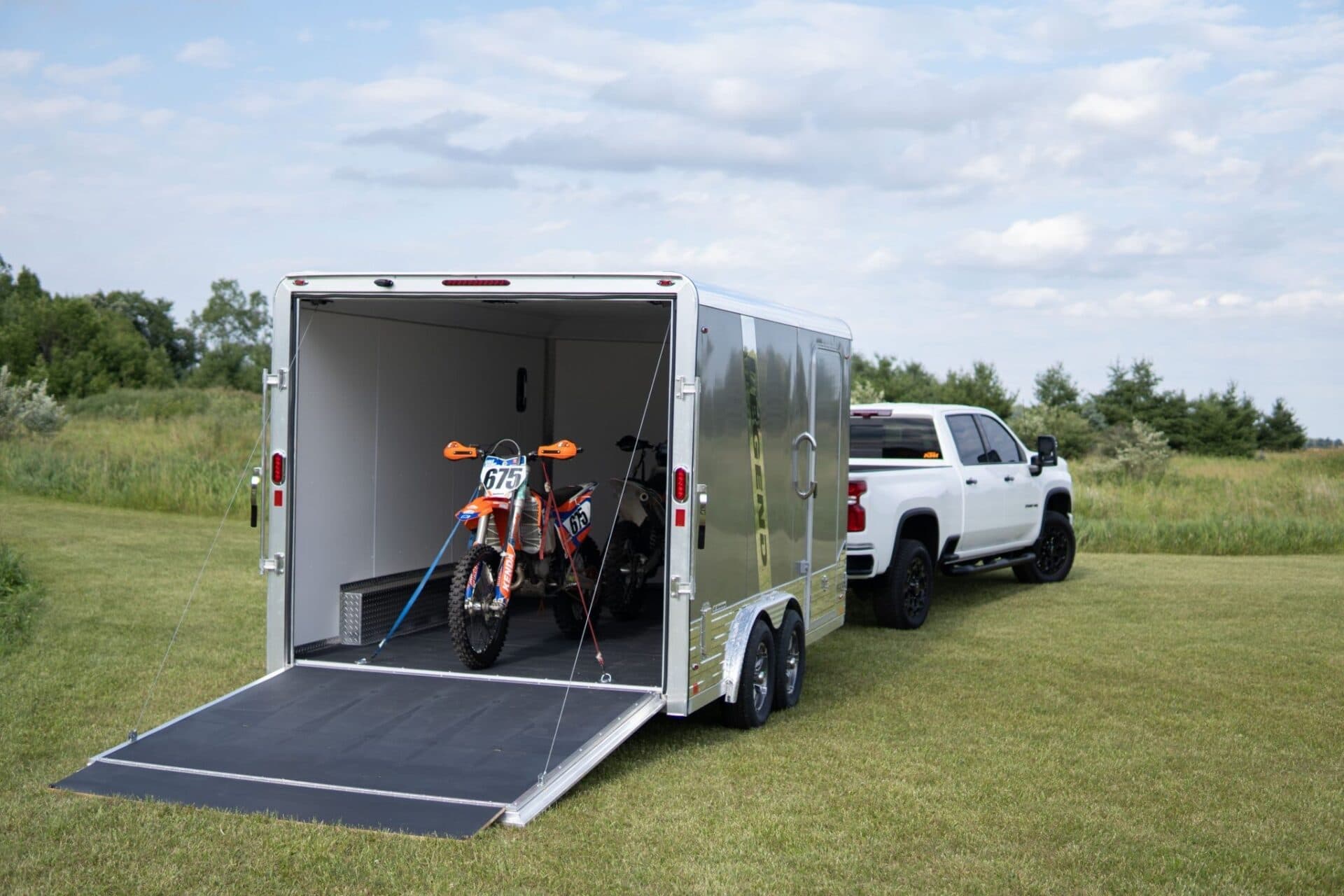
Carriers are screened for active operating authority and cargo insurance before being matched with a motorcycle shipment.
From a budget-friendly open trailer to fully enclosed or crated protection, the transport method is matched to the bike and route.
Quotes reflect the full cost of the move up front based on the bike, distance, and transport type - no surprise add-ons later.
From a short regional move to a full cross-country relocation, the same booking process covers all 50 states.
Motorcycle shipping, also called motorcycle transport, is the process of moving a motorcycle by professional carrier instead of riding it to its destination. It's commonly used when relocating, buying a bike from out of state, heading to a rally or track event, moving a bike seasonally, or shipping a motorcycle that isn't currently rideable. Rather than putting hours of highway miles and unpredictable weather on a bike, motorcycle transport gets it there on a trailer, secured and documented from pickup to delivery.
Most riders don't need to crate a motorcycle for domestic shipping - professional open or enclosed transport handles the vast majority of bikes safely and affordably. Here's how the three options compare:
| Factor | Open Trailer | Enclosed Trailer | Crated |
|---|---|---|---|
| How it's loaded | Ridden or rolled onto an open trailer, secured upright | Ridden or rolled into a covered trailer, secured upright | Bike is placed inside a custom wooden or metal crate |
| Weather protection | None - exposed to normal weather and road conditions | Full protection from weather and road debris | Full protection, plus protection from contact with other cargo |
| Typical cost | Lowest cost option | Moderate premium over open transport | Highest cost, due to crate and specialized handling |
| Best for | Standard cruisers, sport bikes, and daily riders | Higher-value, custom, or vintage motorcycles | International shipments, extremely rare or delicate bikes |
| Availability | Widely available on nearly every route | Fewer trucks, may take longer to schedule | Requires advance planning and crating arrangements |
For a standard cruiser, sport bike, or touring motorcycle being shipped domestically, open trailer transport is usually the practical choice. Enclosed transport is worth the added cost for a custom, high-value, or vintage bike, and crating is generally reserved for international shipments or motorcycles too rare or delicate to strap conventionally.
Share the make, model, and route, and get a straightforward recommendation along with an accurate, no-obligation quote.
Booking starts with a quote based on the bike's make, model, and year, the pickup and delivery locations, and the preferred pickup date. Once scheduled, the driver arrives, inspects the motorcycle, and documents its condition on a bill of lading before loading it. Running motorcycles are typically ridden or rolled onto the trailer under their own power; non-running bikes are loaded manually using a ramp or lift.
Once loaded, the bike is secured upright using a front wheel chock, which holds the front wheel in place, combined with soft tie-down straps attached to the frame or handlebars rather than to more delicate components like mirrors or exhaust pipes. At delivery, the driver and recipient inspect the bike together, compare it to the pickup documentation, and sign the bill of lading to confirm its condition.
Custom, high-value, or investment-grade motorcycles sometimes have needs that overlap with our luxury and exotic car shipping guide, particularly around insurance coverage. Vintage and classic motorcycles often follow many of the same handling principles covered in our classic car shipping guide, especially when it comes to enclosed transport and careful documentation. For golf carts and similar small vehicles, see our golf cart shipping guide, which covers related handling and trailer considerations.
Motorcycle shipping generally costs less than shipping a car on the same route, since a bike takes up a smaller footprint on the trailer. Because these factors vary shipment to shipment, an built around the specific bike and route is the most reliable way to get an exact number.
Carriers are required to carry active cargo insurance covering motorcycles in transit. Standard coverage is generally adequate for most bikes, but for a high-value, custom, or vintage motorcycle, it's worth checking the coverage limit against the bike's actual value and requesting a certificate of insurance for the assigned truck before pickup.
Door-to-door motorcycle shipping picks up and delivers the bike directly at the addresses provided, and is the more convenient option for most riders. Terminal-to-terminal shipping requires dropping off and picking up the motorcycle at a designated terminal, which can sometimes lower cost but adds extra coordination and driving on both ends. Door-to-door service is available in most areas and is the default choice for the majority of motorcycle shipments.
Motorcycle transport comes up in a handful of recurring situations, each with slightly different priorities:
Relocation. Moving to a new state or across the country is one of the most common reasons to ship a bike rather than ride it, especially alongside a household move where the motorcycle is just one of several vehicles being relocated at once.
Online or out-of-state purchases. Buying a motorcycle from a private seller or dealership in another state means the bike needs to get to its new owner somehow - shipping avoids putting a few hundred or a few thousand miles on a machine before its first ride with the new owner.
Rallies, shows, and track events. Riders heading to a major rally, a bike show, or a track day often ship the motorcycle ahead of time and fly in separately, arriving rested and with the bike already staged.
Seasonal relocation. Riders who split time between homes seasonally, sometimes called snowbird schedules, frequently ship a motorcycle along with a car rather than trailer it themselves.
Non-running or project bikes. A motorcycle being bought for a restoration project, or one that simply doesn't run, still needs to get from the seller to the buyer - shipping with the right loading equipment handles this without requiring the bike to be rideable.
Dealership and fleet moves. Dealerships relocating inventory between locations, or fleets moving several bikes at once, often coordinate multiple motorcycles as a single shipment.
Myth
Motorcycles have to be crated to ship safely.
Reality
Most motorcycles ship safely and affordably on open or enclosed trailers, secured with a wheel chock and tie-down straps. Crating is typically reserved for international freight or extremely rare and delicate bikes.
Myth
Shipping a motorcycle costs about the same as shipping a car.
Reality
Motorcycle shipping generally costs less than car shipping on the same route, since a bike takes up considerably less space on a trailer.
Myth
Non-running motorcycles can't be shipped.
Reality
Non-running motorcycles can typically still be shipped using a ramp or lift for manual loading, as long as the condition is disclosed in advance so the right equipment is arranged.
Senren Liu
“Shipped my car from Houston to Berkeley and had an excellent experience. No bait-and-switch tactics, no AI chatbots - just fast, clear, and reliable communication. Highly recommended.”
April 13, 2026
Elango Peri
“We recently shipped our car with Star Auto Shipping, and the experience was excellent. Everything went smoothly-the timing was perfect, and the car was delivered right on schedule. I will definitely use their services again in the future.”
April 28, 2026
Joe DeAmicis
“Jerry Brown, my sales rep, was very responsive and attentive to make sure the car was picked up on time and as promised. He always answered my calls and never left me hanging. Would definitely use them again.”
May 18, 2026
Karen Matilda
“I had an excellent experience with this Star Auto Shipping company! From start to finish, the communication was outstanding.If you’re looking for a reliable, professional, and trustworthy car transport company, I highly recommend them. Great communication, excellent service and fair pricing”
July 7, 2026
Samia Farooq
“I had an outstanding experience with Star Auto Shipping from start to finish. The entire process was incredibly smooth, well organized, and completely stress free.If you’re looking for a company that is fast, reliable, honest, and communicates every step of the way, I highly recommend Star Auto Shipping”
August 5, 2026
Ravichandran Palaniope
“I recently used Star Auto Shipping to move my car from Wilmington, Delaware, all the way down to Katy, Texas, and I am very impressed with the service. The entire process was smooth, and the communication was great from start to finish. My vehicle arrived safely and on time. If you're looking for a reliable auto transport company, I highly recommend their team for a stress-free experience!”
March 15, 2026
Idah V.
“Incredible communication by this team. They do as they say. I spoke either Jerry and he promised that he will get all that i needed on time and surely he did. He also sought for a better rate than initially submitted. ”
July 5, 2026
Jeff A
“Close to the best price but way above in service, communication and sticking to promises. I contracted the lowest bidder and for 9 days got empty promises. Finally contacted Star and they picked up next day.”
June 4, 2026
Brigette
“I googled a few places and landed here. I’m glad I did. Star Auto did not over quote, they were honest with quick response. I called on Wednesday & vehicle was picked up by Thursday. The best part is that the car was delivered Saturday morning. Everyone was professional. Most importantly, I would use again and most definitely refer.”
June 8, 2026
Makaiyla Perdue
“10/10 experience! The best car delivery service, great communication and fast delivery. Thank you so much my car was delivered with no issues!”
August 13, 2026
SHOAIB CHOUDHRY (.)
““Excellent car shipping service! Fast, professional, reliable, and completely stress-free. Highly recommend!””
September 4, 2026
christian pittinaro
“Great overall experience! Delivered on time with great communication.”
August 24, 2026
Twyla West
“Great communication, car was shipped from Houston to Cleveland Ohio. Came on time and in perfect condition. Great price!”
August 18, 2026
Chloe Van
“Great customer from Jerry, highly recommend them. No hidden or extra fee at the end”
August 14, 2026
Anthony Hall
“They were quick and professional. We broke down in Massachusetts while driving from Maine to Virginia and had to be brought back to Maine. They were very helpful and responsive.”
August 5, 2026
Nevil Patel
“Recommend the service”
July 3, 2026
Saravana Prasad S
“Reliable delivery!”
July 29, 2026
Luna Production713
“10/10 great service from Houston to Lubbock no issues. Car arrived in perfect condition”
July 28, 2026
Isaiah Medina
“Jerry was great, professional, and informative, he made the process very easy! Highly recommend this company!”
July 20, 2026
Hasnan Rashid
“Great service with excellent response time. Definitely my new go-to for shipping cars”
July 17, 2026
Vahid Sh
“Good price and on time delivery”
July 10, 2026
J P
“Excellent service, Gerry was very helpful and showed a lot of interest and respect for getting the job done!!”
June 18, 2026
Nirali Patel
“Jerry was patient, professional, and incredibly helpful throughout the entire shipping process. He worked around our schedule to find a driver that fit our timing, and made everything as smooth as possible. Overall, it was a great experience, and I would definitely recommend them to anyone looking to ship their vehicle!”
June 29, 2026
Parimal Desai
“Excellent service. Reasonable price. Very reliable and safe. Great communication. Shipped SUV from Texas to Connecticut. Highly recommend using Star Auto Shipping!”
September 8, 2026
axel
“Great experience from start to finish. Communication was clear and professional, everything was punctual, and the paperwork and payment process were easy to understand. They kept both the drivers and me informed throughout the entire transport process. Smooth, reliable, and well organized. Highly recommended!”
September 11, 2026
Temilade Shonibare
“I found this company online and called to speak with Jerry. He was very attentive and helped me ship a car with a quick turnaround time the next day! He connected me with a great driver, Olamide. Started on Friday & I received the car in Atlanta from Houston by Sunday! Highly recommend.”
September 14, 2026
Anabel Lambert
“Great experience overall! My car arrived quickly and everything went smoothly. They kept in contact with me throughout the process, and the contract terms were clear and easy to understand. No surprises, good communication, and my car arrived safely. I would definitely use them again!”
September 19, 2026
Motorcycle shipping, also called motorcycle transport, is the process of moving a motorcycle from one location to another using a professional carrier instead of riding it there. Bikes are typically shipped on an open or enclosed trailer alongside other vehicles, or crated for extra protection, and secured with a front wheel chock and soft tie-down straps.
Motorcycle shipping cost depends on distance, the bike's size and weight, whether it ships on an open trailer, an enclosed trailer, or crated, its running condition, and how flexible the pickup date is. Motorcycle shipping generally costs less than shipping a car on the same route, since bikes take up less trailer space, but an instant quote based on the specific bike and route gives the most accurate number.
Open motorcycle shipping transports the bike upright on an open-air trailer alongside other vehicles, secured with a wheel chock and straps, and is the most common and affordable option. Enclosed motorcycle shipping uses a fully covered trailer to shield the bike from weather and road debris, generally recommended for higher-value or vintage bikes. Crated motorcycle shipping secures the bike inside a custom wooden or metal crate before loading, offering the most complete protection and the option most often used for international shipments or extremely rare motorcycles.
Wash the bike so any existing damage is visible, photograph it from all angles including the fuel tank, mirrors, and exhaust, note the mileage, drain fuel to about a quarter tank, disconnect the battery or make sure the kill switch is accessible, remove saddlebags, windshields, and other loose accessories, and check tire pressure so the bike is stable during loading.
Yes. Carriers are required to carry active cargo insurance covering motorcycles in transit. Coverage limits vary by carrier, so for a high-value, custom, or vintage motorcycle, it's worth confirming the coverage limit against the bike's value and requesting a certificate of insurance before pickup.
Yes, in most cases. A non-running motorcycle typically requires a ramp or lift for manual loading instead of riding it onto the trailer, so it's important to disclose that a bike doesn't start or roll freely when requesting a quote, since it affects which carrier and equipment can be assigned.
Transit time depends mainly on distance. Short regional shipments often complete within a few days once picked up, while cross-country motorcycle shipments typically take about a week to ten days, similar to timelines for shipping a car the same distance.
Crating usually isn't necessary for standard domestic motorcycle shipping. Professional open or enclosed trailer transport, using a wheel chock and soft tie-down straps, is the common and cost-effective choice for most bikes moving within the United States. Crating is more often used for international shipments, extremely rare or fragile motorcycles, or bikes with bodywork that can't be safely strapped.
Yes. Trikes and three-wheeled motorcycles can be shipped, though they take up more trailer space than a standard two-wheeled bike, which can affect pricing and which carrier is available for the route.
Door-to-door motorcycle shipping picks up and delivers the bike at the addresses provided, offering the most convenience. Terminal-to-terminal shipping requires dropping off and picking up the motorcycle at a designated terminal, which can lower cost in some cases but adds extra coordination and driving on both ends.
Motorcycles are typically secured using a front wheel chock, which holds the front wheel in place and keeps the bike upright, combined with soft tie-down straps attached to the frame or handlebars rather than to more delicate components.
Yes. Vintage and classic motorcycles are commonly shipped using enclosed transport to protect original paint, chrome, and components from weather and road debris. Many of the same handling principles used for classic car shipping apply to vintage motorcycles as well.
Compare the bike's condition against the pre-shipment photos before signing the delivery paperwork, checking the fuel tank, fairings, mirrors, and exhaust closely. Note anything new directly on the bill of lading before the driver leaves, since it becomes the primary record for any damage claim.
Yes. Shipping several motorcycles at once, whether for a dealership, a collection, or a group of riders relocating together, can often be coordinated as a single shipment, which simplifies scheduling and paperwork compared to booking each bike separately.
Yes. Demand for motorcycle shipping tends to rise in spring and early summer as riders bring bikes out of winter storage or relocate for riding season, which can affect both price and scheduling lead time on popular routes during those months.
Share your bike's details, pickup and delivery locations, and preferred dates for an accurate, no-obligation motorcycle transport quote.